Answer engine optimizationfor franchises.Every location wins its own answer.
One brand, but forty separate questions an assistant has to answer. Win the answer in one city and you have won one city. We build the architecture that wins them systematically, without fragmenting the brand doing it.
“Best in this area, who should I use?”
Profile complete, reviews recent, page specific
“Best in this area, who should I use?”
Thin page, stale profile, six reviews
Illustrative. Same brand, same service, two different answers. That gap is the whole problem.
In short
AEO for franchises is answer engine optimization applied across a multi-location network, where every location is a separate question an assistant has to answer. It combines a shared brand entity and schema architecture with location pages that are genuinely distinct rather than thin duplicates, business profiles cleaned and completed across the estate, and reviews built branch by branch.
One brand. As many answers as you have locations.
A national brand campaign does not win a local answer. An assistant asked for a recommendation in one city answers from that city data, then answers the identical question in the next city from entirely different data. Every tile below is a separate contest.
Illustrative. Each tile is one location and one separate answer to win. A twenty-four branch network is competing in twenty-four local contests at once, and a brand-level campaign wins none of them on its own.
One entity, many addresses
A model needs to understand that forty listings are forty branches of one business, not forty unrelated companies with similar names. That relationship gets defined explicitly in the entity and schema layer so brand authority flows down to every location instead of pooling nowhere.
Locked brand facts
What you do, how you do it, what you stand for and how you describe your services stays identical everywhere. These are the facts a model corroborates across your whole estate, and inconsistency here is what makes an assistant less confident about recommending any of you.
Genuinely local detail
Service areas, opening hours, team, recent work in that city, the questions customers actually ask in that market. This is what makes each location a real answer to a real local query rather than a template with a place name swapped in.
A system, not forty projects
Every location gets built from the same architecture, so adding your forty-first is a process rather than a fresh negotiation. That is also what makes the estate maintainable when Google changes something or you rebrand a service line.
Location pages that are actually different
Most franchise location pages are one template with a place name swapped in. A model will not extract an answer from that, because there is nothing on the page that answers a local question. The fix is deciding deliberately which parts are shared and which are genuinely unique, then building the system around that split.
Shared is not a weakness, it is corroboration
Brand positioning, service definitions, compliance marks and schema architecture should be identical across the estate. Those are the facts a model checks against itself, and consistency there is what makes it confident enough to recommend any of you.
Unique is where the answer comes from
The local heading, recent work in that city, the branch team, service areas, the questions customers actually ask in that market and reviews from that branch. This is the material an assistant extracts when someone asks a local question.
Built as a template, filled with real substance
The architecture is programmatic so the fortieth page costs a fraction of the first. What goes into the unique zones is genuine local material, not synonym-swapped filler, because filler is exactly what gets a page ignored.
Which is why we roll out in cohorts
Publishing forty pages in one week is how a site gets read as a content farm. Cohorts let us confirm the template is producing before committing the whole estate to it, and it looks like what it is: a network doing steady, credible work.
Your estate has listings you do not know about
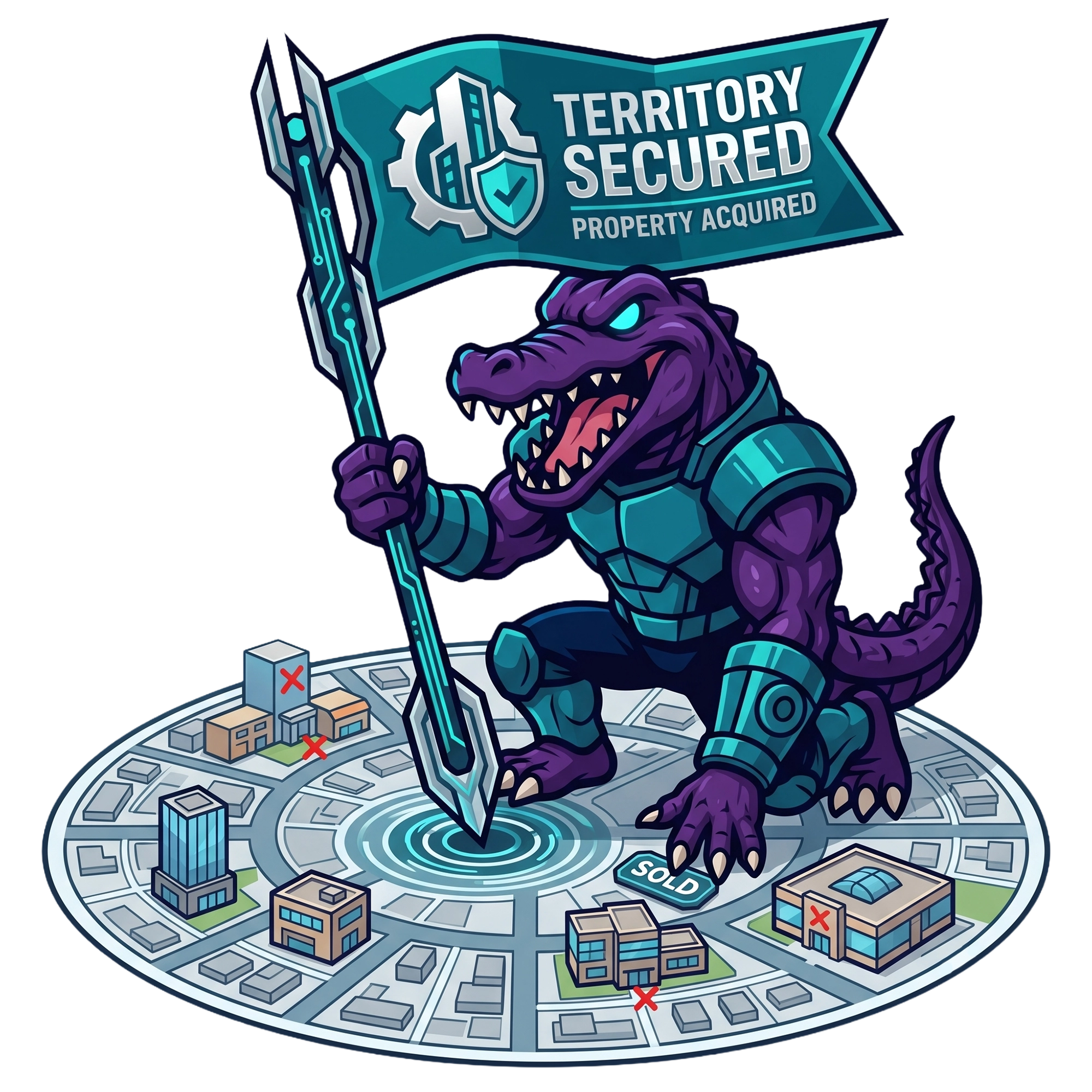
Every franchisor we audit has more listings than locations. Some are duplicates, some belong to franchisees who left, some were created automatically by data aggregators. Each one splits your signal and makes a model less certain about where you are and what you do.
On the second call we will show you a handful of the rogue listings we find in your own network. It tends to be the moment this stops being abstract.
Your weakest branches are setting your brand ceiling
Reviews are unevenly distributed in every network we have looked at. One branch has hundreds, another has eleven with the newest from two years ago. Assistants weigh reputation per location, so the thin ones simply lose their local answer no matter how strong the brand is nationally.
We run the outreach, branch by branch
Deligatr runs managed outbound as the other half of its business, which means the infrastructure, the deliverability and the sequencing experience already exist. For a franchise engagement we point that inward, per location, at the customers each branch has already served.
Why an SEO agency cannot do this
Running approved outreach across forty customer lists at once needs real infrastructure and deliverability management. Most agencies hand a franchisor a review request template and a spreadsheet, then wonder why the weak branches stay weak.
We built the outbound engine first and added the visibility work second. That order is the reason this is included rather than outsourced.
See the outbound engine
Prospective franchisees are asking AI too. Nobody has optimized for it.
You sell to two audiences. Customers looking for a service, and entrepreneurs looking for a franchise to buy. Both now put their shortlist question to an assistant. One of those two answers is worth vastly more per name than the other, and almost nobody in franchising is competing for it.
Two funnels, one foundation
Customer queries
Best provider near me, per location
Recruitment queries
Best franchise to buy in this category
The same entity and schema layer
Most franchisors pay two agencies to build the same foundation twice, then wonder why the brand entity looks fragmented to a machine reading both.

Who controls what is a political question before it is a technical one
In some networks head office holds every profile. In others each franchisee owns theirs and central marketing cannot touch it. We scope which of these you are before anything else, because the whole plan depends on it.
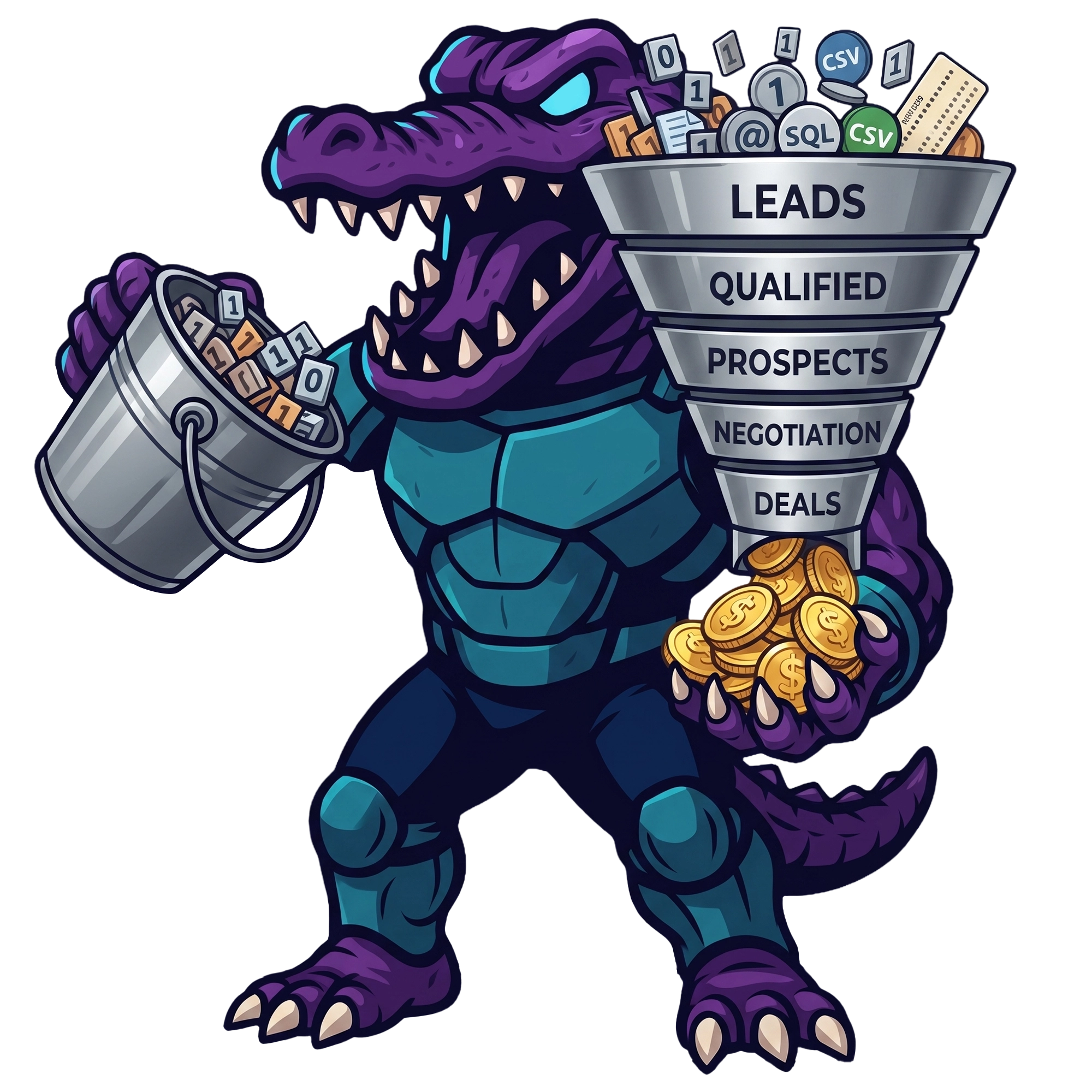
Mode one
Head office led
Brand HQ commissions the work. We build the entity architecture, the location page system and the schema layer centrally, and handle profiles for every location where head office holds access. Franchisees receive the benefit without needing to do anything.
Mode two
Head office plus franchisee opt-in
HQ commissions the central system, then individual franchisees opt in for their own profile, review and local content work. Billed to head office or direct to the franchisee, whichever fits how your network is structured commercially.
Mode three
Multi-unit franchisee direct
You own several units and want them visible without waiting for head office to act. We work inside your brand guidelines and stay in the lane your franchise agreement allows, and we will tell you plainly where that lane ends.
If some franchisees will not engage
The architecture is designed for it. Central work lives on assets head office controls, so the brand entity, schema layer and location page system deliver regardless of individual participation. Profile and review work needs access, so where a franchisee will not engage we do not do that part and reporting shows the gap plainly. In practice, once participating locations start appearing in answers and the others do not, your next network meeting gets a lot easier.
A brand view and a branch view, because they answer different questions
An estate average tells you almost nothing useful. What matters is which locations are winning their answer, which are not, and why.
Brand-level roll-up
How often the brand is named across every market you operate in, share of voice against national and regional competitors, and which locations are pulling the average up or dragging it down.
Per-location detail
A view each franchisee can actually use for their own market: their queries, their competitors, their profile actions, their reviews. Useful at a network meeting rather than another central deck nobody reads.
Outliers flagged, not buried
The three branches that are invisible matter more than the thirty-seven that are fine. Reporting leads with the exceptions so you know where to spend attention.
AI referral traffic split out
Visitors arriving from ChatGPT, Perplexity, Gemini and Copilot tracked as their own channel per location, rather than lumped into organic where you cannot see them.
Slower to start than a single location, then it accelerates
The first two months go on architecture, which feels slow because little is visible. It is also what makes the next thirty-eight locations cheap and repeatable rather than thirty-eight fresh negotiations.
Months 1 to 2
Central architecture
Entity and schema layer built at brand level, the location page system designed and the first cohort published, duplicate and rogue listings identified across the estate. This is the part that makes everything after it repeatable.
Months 2 to 4
Rollout by cohort
Locations go live in groups rather than all at once, so we can read what is working before committing the whole estate to an approach. Profiles cleaned, pages published, review outreach starting per branch.
Months 4 to 6
Coverage and compounding
Commercial results arriving location by location rather than in one step. Early cohorts are producing while later ones are still being built, which is why franchise engagements feel slower to start and then accelerate.
Why we will not publish it all at once
Forty location pages appearing in a single week is the exact pattern that gets a domain read as a content farm, and recovering from that costs more than doing it properly. Cohorts also mean we confirm the template is actually producing before committing your whole estate to it. Steady and defensible beats fast and fragile, particularly when the asset is a brand rather than one site.
Two calls, and you will know where your estate actually stands
The second one includes a live audit of a handful of your locations, rogue listings included.
Call one
Our sales team
About 30 minutes
- We learn your network size, your structure and who controls what
- We run local queries across a sample of your markets and show you where the brand appears and where it does not
- We confirm which operating mode fits how your franchise is set up
- You get a scoped figure before any commitment
Call two
Your account manager and the delivery team
About 45 minutes
- The people who will do the work, not a different team after signing
- A live audit of a handful of your locations, including the duplicate listings you did not know existed
- The location page architecture we would build, and how a new franchisee gets onboarded into it
- Whether franchise recruitment visibility is worth running alongside the customer side
You will not be sold by one team and handed to another. The people on call two are the people building your architecture.
Book a Network Visibility CallFranchise categories we turn down
Gambling, casinos and 18+
Not a fit for how we work, and not a market we build in. We would rather tell you on the first call than take the engagement and under-serve it.
Regulated advice categories
Medical, legal and financial advice sit in what Google classifies as Your Money or Your Life, held to an evidence standard requiring genuine, verifiable professional credentials attached to the content. An agency cannot manufacture those signals, which rules out some healthcare and financial services franchise models.
Saying no to the wrong work is how we protect the results of the right work.
Franchise AEO, answered
The questions franchisors and multi-unit owners ask on nearly every first call.
What is AEO for franchises?
AEO for franchises is answer engine optimization applied across a multi-location network, where every location represents a separate question an AI assistant has to answer. When someone asks for the best provider in one city, that is a different answer from the same question asked in the next city, so a forty-location franchise is competing in forty separate answers rather than one. The work covers a shared brand entity and schema architecture, a location page system that produces genuinely distinct pages rather than thin duplicates, business profiles cleaned and completed across the estate, and reviews built branch by branch.
How is this different from franchise local SEO?
Franchise local SEO competes for positions in the map pack and organic results for each location, where a customer still compares several options themselves. Franchise AEO competes to be named inside the answer an assistant gives, where the recommendation has already been made. The foundations overlap heavily, so your map pack and organic performance improve while we optimize for AI. The bigger difference is what inconsistency costs you. In traditional search, a badly filled profile mostly hurts that one location. With answer engines, conflicting information across your estate makes a model less confident about the whole brand.
How do you avoid location pages becoming thin duplicate content?
By deciding deliberately which parts of a location page are shared and which are genuinely unique, then building the system around that split. Brand positioning, service definitions, compliance marks and the schema architecture are shared, because those facts should be identical everywhere and a model corroborating them across your estate is a good thing. The local heading and introduction, recent work in that city, the branch team, service areas, the questions customers actually ask in that market and reviews from that branch are unique. A page built that way is a real answer to a real local query, not a template with a place name swapped in.
Who controls the Google Business Profiles, us or the franchisees?
It varies enormously by network, which is why we scope the operating mode before anything else. In some franchises head office holds access to every profile and the work is straightforward. In others each franchisee owns their own listing and central marketing has no ability to change it, which makes this a political problem before it is a technical one. We work in three modes: head office led, head office plus franchisee opt-in, or direct with a multi-unit franchisee. On the first call we work out which one fits your structure rather than assuming.
What if some franchisees will not co-operate?
That is normal and the architecture is designed for it. The central work, meaning the brand entity, the schema layer and the location page system, delivers value regardless of individual franchisee participation because it lives on assets head office controls. Profile and review work needs access, so where a franchisee will not engage we simply do not do that part for that branch, and reporting shows the gap plainly. In practice, once the participating locations start appearing in answers and the non-participating ones do not, the conversation at your next network meeting becomes much easier.
How do you handle our duplicate and rogue listings?
We audit the whole estate first, which usually surfaces more than a franchisor expects. Listings created by a previous franchisee, listings generated automatically by data aggregators, listings for an address you left years ago, and branches listed under inconsistent categories. Each of those splits your signal and makes a model less certain about where you actually are and what you actually do. We identify them, then work through suppression, correction and consolidation. On the second call we will show you a handful of the ones we find in your network, which tends to be the moment this becomes concrete.
Can you help with franchise recruitment as well as customers?
Yes, and it is the part most franchisors have not considered. Prospective franchisees now research opportunities through AI the same way customers research services, asking which franchises are worth buying in a category or at an investment level, and getting a shortlist of names back. Almost nobody in franchising has optimized for those queries. The technical foundation is the same entity and schema work that serves your customer side, so running both is far cheaper than commissioning them separately through two agencies who never speak to each other.
How long does it take across a whole network?
Longer to start than a single location and then it accelerates. Months one and two go on central architecture, which feels slow because little is visible yet, but it is what makes everything after it repeatable. Locations then roll out in cohorts rather than all at once, so we can read what is working before committing the whole estate. Expect early cohorts producing commercial results from around month four while later ones are still being built. A franchise engagement compounds in a way a single location does not, because every lesson from cohort one improves cohort three.
What happens when we open a new location?
It gets onboarded into the existing system rather than treated as a new project. That is the main practical benefit of building an architecture rather than forty individual sites. A new branch gets its page generated from the established template, its profile created correctly from the start rather than fixed later, its schema wired into the brand entity, and review outreach beginning as soon as it has customers. Getting a new location right on day one is considerably cheaper than repairing it in year two.
Do you report per location or at brand level?
Both, because they answer different questions. Brand-level roll-up shows how often the brand is named across every market, share of voice against national and regional competitors, and which locations are moving the average. Per-location reporting gives each franchisee a view they can actually use in their own market: their queries, their competitors, their profile actions and their reviews. Reporting leads with outliers rather than averages, because the three invisible branches matter more to you than the thirty-seven that are performing fine.
Which franchise categories will you not work with?
We do not work with gambling, casinos or 18+ businesses. We also decline regulated advice categories, meaning medical, legal and financial advice. Google classifies those as Your Money or Your Life topics and holds them to an evidence standard requiring genuine, verifiable professional credentials attached to the content itself. An agency cannot manufacture those signals. This rules out some healthcare and financial services franchise models, and we would tell you that on the first call rather than take the engagement and under-deliver on it.
What does it cost for a network?
Franchise engagements are scoped per network, so there is no single published price. The variables that move the number are how many locations are in scope, how much of the estate head office controls versus individual franchisees, the current state of your site and profiles, how many duplicate listings need resolving, and whether you want franchise recruitment visibility running alongside the customer side. Because the work is architectural first and rollout second, cost per location falls as the network size rises. You get a scoped figure on the first call, before any commitment.
Have a question about your network we have not covered?
Ask Us on a CallSee which of your locations AI is already ignoring.
Thirty minutes. We run local queries across a sample of your markets, show you where the brand appears and where it does not, and work out which operating mode fits how your network is structured. If the investment does not make sense at your size, we will say so.
- A scoped figure before any commitment
- Live audit of a handful of your locations on call two
- The rogue listings you did not know existed

Calendar not loading? Open the booking page in a new tab