White label answerengine optimizationunder your brand, not ours.
Add AI visibility to your agency without recruiting a specialist for a discipline that changes monthly. Our team does the delivery. Your brand fronts every piece of it. You keep the client and the margin.
Prepared by
Your agency
AI visibility this month
Times cited in AI answers
Share of voice vs competitors
Queries where you now appear
Profile rebuilt and verified
Four pages published
Reviews landing weekly
Illustrative. No Deligatr name appears anywhere on a client deliverable, report, file name or document metadata.

In short
White label AEO is an arrangement where a specialist team delivers answer engine optimization for your clients under your brand rather than their own. You hold the client relationship, set the price and present the work. The delivery team stays invisible. It lets an agency add AI visibility as a service line without recruiting a specialist or absorbing the learning curve on live accounts.
Three pressures arriving at the same time
Every agency we speak to is holding the same three problems, and the usual answers to them all cost more than they look.

Your clients have started asking
Someone on the client side read an article about ChatGPT eating search and now it is on the agenda of your next review call. You need an answer that is better than we are keeping an eye on it, because that answer costs you authority every time you give it.
Hiring for it is a genuine risk
A specialist in a discipline this young commands a real salary, and the discipline itself is changing month to month. You are hiring against a job description that will be out of date before their probation ends, and carrying that cost whether the pipeline fills or not.
Building it in-house takes a year
Not because the concepts are hard, but because the tooling, the measurement and the failed experiments all have to be paid for before the first client sees a result. That is a year of watching competitors sell something you cannot.
Your client relationship is the asset. We never touch it.
This is the first question every agency asks and it deserves a straight answer rather than reassuring noise. Here is exactly how communication flows and where the line sits.
Talks only to you
Your client
The only client-facing party
Your agency
Never in the room
Us, invisible
We never contact your clients
Not for onboarding, not for approvals, not for anything. Every piece of communication routes through you unless you explicitly invite us onto a call as part of your team.
We never approach your clients
Your client list is not a prospect list. Not while we work together and not afterwards. This is written into the partnership terms, not just promised on a call.
Nothing carries our name
No Deligatr branding on any deliverable, report, document or page. Nothing in a footer, nothing in a file name, nothing in metadata.
Reporting arrives ready to forward
Monthly reporting produced in your brand so you can send it on without editing it first. No stripping logos out at eleven at night before a client call.
You keep the commercial relationship
You set the price, you invoice the client, you own the contract. We invoice you. Your client never sees a number that came from us.
Conflicts get flagged before we accept
If a brief would put us on both sides of a directly competing local market, we tell you before taking it on rather than after you have pitched.
You are quoted a delivery rate. What you charge on top is yours.
Each engagement gets scoped and quoted to you. You set your client price. We invoice you, you invoice them, and your client never sees a figure that came from us.
Because engagements are scoped per business rather than sold as fixed packages, the delivery rate moves with what a client actually needs. Your pricing can flex with it, which means you are not stuck defending a number that does not fit the brief.
Get the Delivery RateHow the money splits
What you invoice your client
What you pay us
Your margin
You control the client price entirely
We invoice you, never your client
Rate scales with scope, so your margin holds
Bar widths are illustrative and not a representation of any specific rate or margin. Your actual figures come from the first call.
What your clients are actually buying
Five surfaces decide whether an AI assistant names a business. Which of them apply gets scoped per brief, so you are never billing a client for work that will not move their numbers.
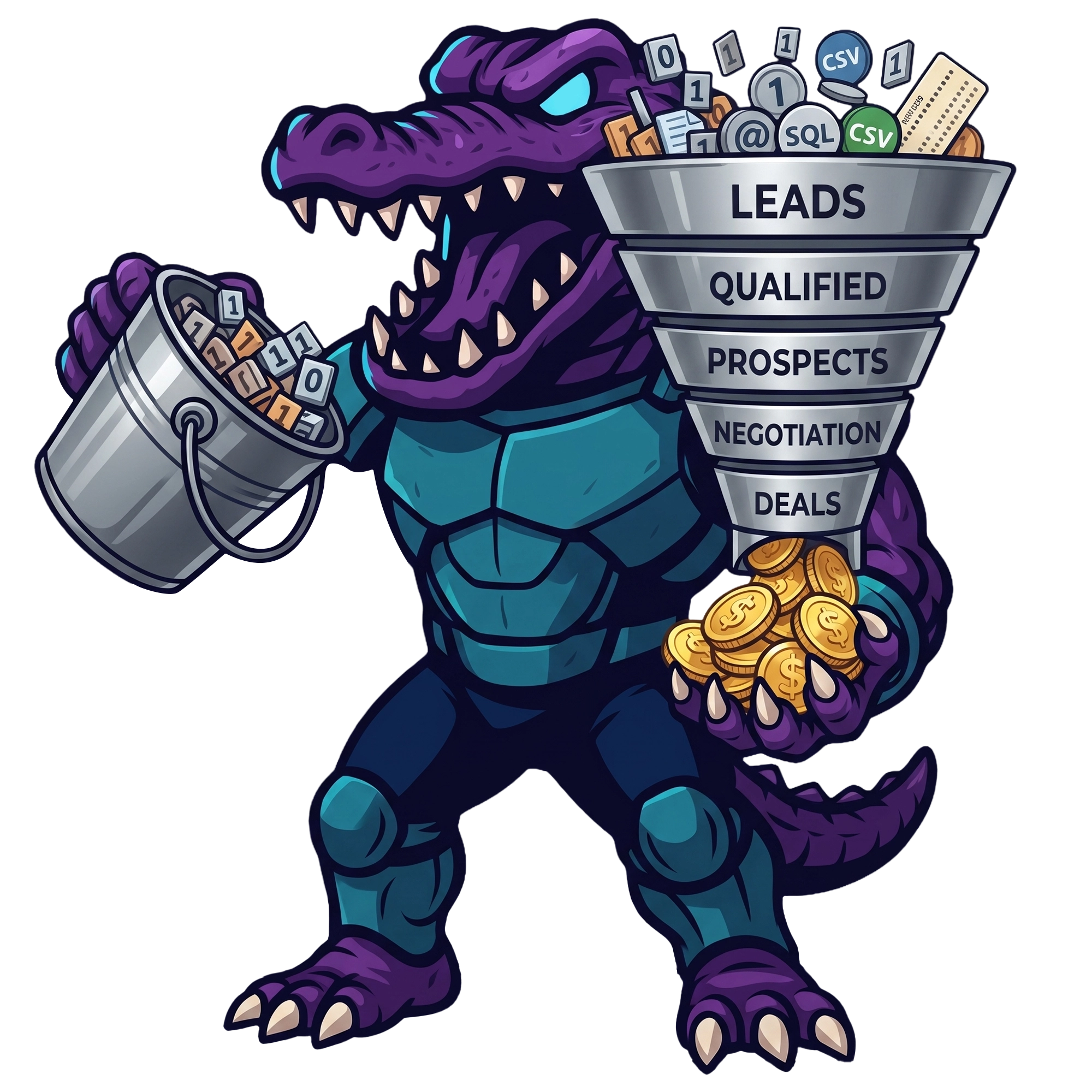
Technical floor, entity clarity, schema architecture, content restructured so answers can be extracted whole.
Categories, services, attributes, hours, service areas, posts, questions and answers, and NAP consistency everywhere.
Merchant Center sync and feed optimization with matching product schema, where the client sells online.
Built from a compact set of high-intent, low-competition queries, one page per intent, designed to convert.
Outreach run to the client existing customer base through our own outbound infrastructure, bringing reviews in.
We do not just deliver it. We help you sell it.
A white label partner who can only deliver leaves you with the hardest part of the job. Selling a service you have never delivered, to a client who has not heard of the problem yet, is where most agency service lines quietly die.
The hook you walk in with
“We asked AI who the best in your category is. Here are the three businesses it named. You were not one of them.”
It is specific, it is provable in thirty seconds while you are sitting with them, and it reframes the conversation from an upsell into a gap they did not know they had. That is the entire pitch, and you can run it on a prospect before you have sold a single engagement.

Hire it, build it, or partner for it
All three get you to the same service line. They differ enormously in what you carry while you get there, and in what happens when the discipline shifts again.

| Dimension | Hire a specialist | Build it in-house | Partner with us |
|---|---|---|---|
| Time to first client delivery | Recruit, notice period, then ramp | Months of tooling and failed experiments | Start on your next signed brief |
| Fixed cost carried | Salary, tools and overhead every month | Your own team time, unbilled | Cost scales with the work you sell |
| Risk if the discipline shifts | You carry it | You carry it | We carry it |
| Who absorbs the learning curve | Your first few clients | Your first few clients | Nobody on your side |
| Capacity at one client | A specialist sitting mostly idle | Heavily over-invested | Proportionate |
| Capacity at twenty clients | You are hiring again | You are hiring again | Same arrangement, more volume |
| Whose brand is on the work | Yours | Yours | Yours |
Time to first client delivery
Hire
Recruit, notice period, then ramp
Build
Months of tooling and failed experiments
Partner
Start on your next signed brief
Fixed cost carried
Hire
Salary, tools and overhead every month
Build
Your own team time, unbilled
Partner
Cost scales with the work you sell
Risk if the discipline shifts
Hire
You carry it
Build
You carry it
Partner
We carry it
Who absorbs the learning curve
Hire
Your first few clients
Build
Your first few clients
Partner
Nobody on your side
Capacity at one client
Hire
A specialist sitting mostly idle
Build
Heavily over-invested
Partner
Proportionate
Capacity at twenty clients
Hire
You are hiring again
Build
You are hiring again
Partner
Same arrangement, more volume
Whose brand is on the work
Hire
Yours
Build
Yours
Partner
Yours
The operational detail agencies actually ask about
A white label arrangement lives or dies on process, not on capability. Here is how briefs, approvals, updates and escalations flow.
You brief, we scope
You send us the client, the market and the goal. We come back with the scope, the surfaces worth working on and the figure. You decide what to charge on top of it.
One point of contact, the same one
A single delivery lead across your accounts who learns how your agency works. You are not re-explaining your process to a new face each quarter.
Two approval gates
Nothing publishes without your sign-off, and by extension your client sign-off. You are never in the position of explaining something you had not seen.
Weekly written updates per account
A short written update on each active account so you always have something concrete for your own client check-ins, without having to chase us for it.
Monthly reporting in your brand
AI visibility movement, search performance, what shipped and what comes next. Produced ready to forward under your logo.
Escalation you can actually use
When a client asks something technical you cannot answer, you get a straight answer from us quickly enough to use it in the same conversation.
Agencies who already hold the trust
If you already have the client relationship and the retainer, this is the fastest way to raise what that relationship is worth. If you are still building the client base, the sales enablement side matters more to you than the delivery side, and we would talk through that honestly on the first call.
Briefs we will turn down
Gambling, casinos and 18+
Not a market we build in. We will tell you before you pitch rather than after.
Regulated advice categories
Medical, legal and financial advice sit in what Google classifies as Your Money or Your Life, held to an evidence standard requiring genuine professional credentials attached to the content. Neither of us can manufacture those signals.
Direct competitive conflicts
If a brief would put us on both sides of a directly competing local market, we flag it before accepting rather than taking it quietly and hoping nobody notices.
A partner who says yes to everything is a partner who will eventually embarrass you in front of a client.
Pitching within a week. Delivering on your first signed brief.
Setup is fast because we are not learning your client business, you are. We are learning yours.
Week 1
Partnership setup
Terms and non-solicitation signed, your reporting template branded, your delivery lead assigned, and the sales enablement pack in your hands so you can start pitching immediately.
Your first brief
Scope and quote
You send a client, we scope the surfaces and come back with a figure. You mark it up and pitch. Nothing starts until you have said yes.
Then it repeats
Volume without headcount
The second account works exactly like the first, and so does the twentieth. The only thing that changes is how much of it you are selling.
Set the client expectation on the pitch
Client-side, AEO produces early movement from around month two and commercial results typically between month three and month five depending on whether they are local or national. Say that on the pitch rather than after. The agencies who get burned on this service line are the ones who let a client believe it works in weeks, and the objection handling we give you covers exactly how to frame it without losing the deal.
Two calls, and you will know if the numbers work
The second one includes a live visibility check on one of your real clients, so you see the actual output before committing to anything.
Call one
Our partnerships team
About 30 minutes
- We learn your agency, your client base and what you already sell them
- We confirm whether a white label arrangement makes commercial sense for you
- We walk through the boundary terms, the reporting and how briefs flow
- You leave knowing the delivery rate before any commitment
Call two
The delivery lead who would run your accounts
About 45 minutes
- The person you will actually work with, not a different team after signing
- A live visibility check on one of your real clients so you can see the output
- The sales enablement pack walked through end to end
- How the first brief would run, step by step
You meet the delivery lead before you commit, not after. If the fit is wrong, better that we both find out on call two.
Book a Partnership CallWhite label AEO, answered
The questions agency owners ask on nearly every partnership call.
What is white label AEO?
White label AEO is an arrangement where a specialist team delivers answer engine optimization for your clients under your brand rather than their own. You hold the client relationship, you set the price, you present the work, and you invoice. We do the delivery and stay invisible. It lets an agency add AI visibility as a service line without recruiting a specialist, building the tooling, or absorbing the learning curve on live client accounts. Everything that reaches your client, from the strategy to the monthly reporting, arrives in your brand and ready to forward.
Will you ever contact or approach my clients?
No, on both counts, and it is written into the partnership terms rather than just promised on a call. We do not contact your clients for onboarding, for approvals, or for anything else. Every communication routes through you. The only exception is when you explicitly invite us onto a call as a member of your team, which some agencies do on larger pitches where technical depth helps. We also do not treat your client list as a prospect list, during the partnership or after it ends. Your relationships are the asset you are protecting by working this way, and undermining them would end our own business model.
Whose brand goes on the reporting and deliverables?
Yours, everywhere. No Deligatr name or logo appears on any deliverable, report, document, page or file. That includes the places agencies usually get caught out: footers, file names and document metadata. Monthly reporting is produced in your brand and formatted so you can forward it to your client without editing it first. If your agency has a specific report template or brand guideline you want followed, we build to that during partnership setup in week one rather than sending you something generic to fix yourself.
How does the margin work?
You are quoted a delivery rate for each scoped engagement. You decide what to charge your client on top of it, and the difference is your margin. We invoice you, you invoice your client, and your client never sees a figure that came from us. Because engagements are scoped per business rather than sold as fixed packages, the delivery rate moves with how much work a given client actually needs, which means your pricing can flex too. We talk through the specific rate on the first call, before any commitment, so you can model your own numbers before deciding.
What if my client wants to meet the delivery team?
That happens, and it is not a problem. Our delivery lead can join a call as a member of your team, introduced however you like, with no reference to Deligatr. Plenty of agencies use this deliberately on bigger accounts, because having someone in the room who can answer a hard technical question in real time closes deals. Other agencies never do it and prefer to stay the single point of contact throughout. Both work. You choose per account rather than committing to one approach up front.
Is there a minimum commitment or client volume?
The arrangement is designed to work at one client and at twenty, so there is no volume floor to clear before it makes sense. What we do ask for is a genuine intention to sell it rather than a partnership signed and then forgotten, because the sales enablement work we do in week one only pays off if you actually pitch. Individual client engagements are ongoing rather than one-off projects, because AI visibility decays when nobody maintains it. We cover commitment terms on the first call.
What exactly do you deliver for each client?
The same five-surface engagement we deliver directly: the client website, their business profile, their product data where they sell online, landing pages built from a compact high-intent keyword set, and customer reviews generated through outreach to their existing customer base. Which of the five apply depends on the client, and we scope that per brief rather than running an identical checklist on everyone. If a client only needs two of the surfaces we say so and price accordingly, rather than billing you for work that will not move their numbers.
Do you help me sell it, or just deliver it?
Both, and the sales side is the part most agencies underestimate needing. You get a visibility audit you can run on any prospect before you pitch, so you walk in holding a specific provable gap rather than a general argument. You get the pitch itself written out, the objection handling for the four objections that come up on nearly every AEO conversation, and a one-pager and deck in your own brand. On larger pitches our delivery lead can join the call as part of your team. Delivering a service you cannot sell is not much use to either of us.
How fast can I start selling this?
Partnership setup takes about a week: terms and non-solicitation signed, your reporting template branded, your delivery lead assigned, and the sales enablement pack in your hands. From that point you can pitch. Delivery starts when you send your first signed brief. The client-side timeline is the same as any AEO engagement, meaning early movement from around month two and commercial results typically between month three and month five depending on whether the client is local or national. Set that expectation with your client on the pitch rather than after.
Do you work with agencies that compete with each other?
We work with multiple agencies, which means it is possible for two of our partners to serve clients in similar spaces. Where a brief would put us on both sides of a directly competing local market, we flag it before accepting the work rather than after you have already pitched. We will tell you plainly if a conflict exists so you can decide how to proceed. What we will not do is take the brief quietly and hope neither side notices, because the moment that surfaces the partnership is worth nothing to either of us.
Which industries will you not take on?
We do not work with gambling, casinos or 18+ businesses. We also decline regulated advice categories, meaning medical, legal and financial advice. Google classifies those as Your Money or Your Life topics and holds them to an evidence standard requiring genuine, verifiable professional credentials attached to the content itself. An agency cannot manufacture those signals and neither can we. If one of your clients sits in one of those categories we will tell you before you pitch rather than after, which is more useful to you than a partner who says yes to everything.
Can I white label your outbound service too?
Answer engine optimization is the service we white label as a standard arrangement. Our managed outbound offering runs differently, because it involves sending on a client behalf at volume and the deliverability and domain considerations make a white label wrapper more complicated. It is not a flat no, but it needs a specific conversation rather than a page answer. Raise it on the first call and we will tell you honestly what is possible and what is not.
Have a question about the terms we have not covered?
Ask Us on a CallAdd the service line without adding the headcount.
Thirty minutes on whether a white label arrangement makes commercial sense for your agency. You will leave knowing the delivery rate, the boundary terms and how briefs flow, before committing to anything.
- The delivery rate, so you can model your own margin
- A live visibility check on one of your real clients
- We say so plainly if your client base is not the right fit

Calendar not loading? Open the booking page in a new tab